


Looking for a lively, social card game for your next get-together? Meet Samba, a fun-loving cousin of Canasta that’s perfect for a game night. It uses three decks of cards, allowing for bigger plays that keep everyone engaged from the first deal to the final count. Check out ufa14k to know more
This guide is designed for complete beginners and will walk you through the essential rules. No prior experience with similar games is required. From shuffling the decks to making your first “Samba” meld, you’ll learn exactly how to play and be ready to lead the fun at your first game.
What You’ll Need: Setting Up Your First Samba Game
The first thing you’ll notice about Samba is the sheer number of cards. You’ll need three standard 52-card decks, including all six Jokers. Shuffle all 162 cards together thoroughly to create one massive deck. This large pile makes the game’s big hands and high scores possible.
After the cards are mixed, the dealer distributes 15 cards to each player, one at a time. A fifteen-card hand might feel large, but you’ll need it for building the game’s signature combinations. Sort your hand to make planning your first few turns easier.
Finally, place the remaining cards face-down in the center of the table to create the main draw pile, known as the stock. Flip the top card of the stock face-up beside it to start the discard pile. With the table set and your hand ready, you’re all set to play.
How to Play Your Turn: The Simple 3-Step Samba Sequence
Every turn in Samba follows a straightforward pattern involving the two central piles: the face-down stock pile and the face-up discard pile. Mastering this sequence is key to getting started.
Your turn consists of three steps, performed in this exact order:
- Draw Two Cards from the top of the stock pile and add them to your hand.
- Meld (Optional). You may play card combinations, called melds, by placing them face-up on the table.
- Discard One Card from your hand face-up onto the discard pile. This action officially ends your turn.
This sequence means your hand grows by one card each turn, giving you more options for building powerful combinations. Melding is optional; if you don’t have a valid set or are saving cards for a better move, you simply skip that step and go straight to your discard.
What Are Melds? Your Key to Scoring Points
According to the official samba card game rules, a meld is a set of three or more cards of the same rank (e.g., King, 8, or 4). For example, three 10s or four 9s would be a valid meld. You cannot make a meld of mixed ranks, like two Kings and a Queen.
When you play a meld, you take those cards from your hand and lay them face-up on the table. This is the primary way you and your partner score points. Once a meld is on the table, you can add more cards of that same rank to it on future turns. For instance, if your team has a meld of three Jacks, and you draw another Jack, you can add it to the set.
Building these “natural” melds is the foundation of scoring. But when you only have two matching cards, you can use the game’s most powerful cards: wild cards.
The Power of Wild Cards: How to Use Jokers and Deuces
In Samba, all six Jokers and all twelve Deuces (the 2s) are wild cards. They can stand in for any card rank you need, from a 4 to an Ace, helping you complete a set.
For example, if you’re holding two Kings, adding a Joker or a 2 from your hand creates a valid meld of three Kings. A meld that uses a wild card is called a mixed meld. You can also add wild cards to melds already on the table, as long as you follow one crucial rule.
A meld must always have more natural cards (4 through Ace) than wild cards. This means you can create a meld with two 8s and one Joker, but you could not start one with a single 8 and two Jokers. Mastering this rule is essential for building the game’s most valuable asset: a Canasta.
Aiming High: How to Build a Game-Changing Canasta
A Canasta is a super-sized meld containing at least seven cards of the same rank and is your primary objective. For example, if you collect and meld seven 9s, you’ve made a Canasta. These powerful combinations come in two types:
- Natural Canasta: Seven or more cards of the same rank with no wild cards (e.g., seven Kings). This is worth a 500-point bonus.
- Mixed Canasta: A mix of natural and wild cards (e.g., five Queens and two 2s). This is worth a 300-point bonus.
Your strategy should revolve around creating Canastas. A 300-point mixed Canasta is great, but a 500-point natural one can completely change your team’s fortunes. However, an even more valuable play exists: the “Samba” meld.
The “Samba” Meld: Unlocking the Game’s Biggest Bonus
The special meld named after the game itself is the “Samba.” Unlike melds based on cards of the same rank, a Samba is a sequence meld—a run of seven cards in numerical order, all belonging to the same suit, like the 4 through 10 of Spades.
This is a challenging feat that requires both luck and careful hand management. A Samba must be made entirely of natural cards; you are not allowed to use any wild cards (Jokers or 2s) to fill in a gap. Completing a Samba awards your team a massive 1,500 bonus points—three times more than a natural Canasta.
Getting on the Board: Your First Meld Requirement
Before your team can lay down any melds, you must meet an initial meld requirement. The first set of cards your partnership plays must add up to a minimum point value. You can combine several new melds in one turn to reach this total. Think of it as the entry fee for scoring in that round.
The minimum point requirement changes depending on your team’s overall score from previous hands:
- Negative score: 15 points
- 0 to 1,495 points: 50 points
- 1,500 to 2,995 points: 90 points
- 3,000 or more points: 120 points
To see if your cards meet the requirement, you need to know their individual point values.
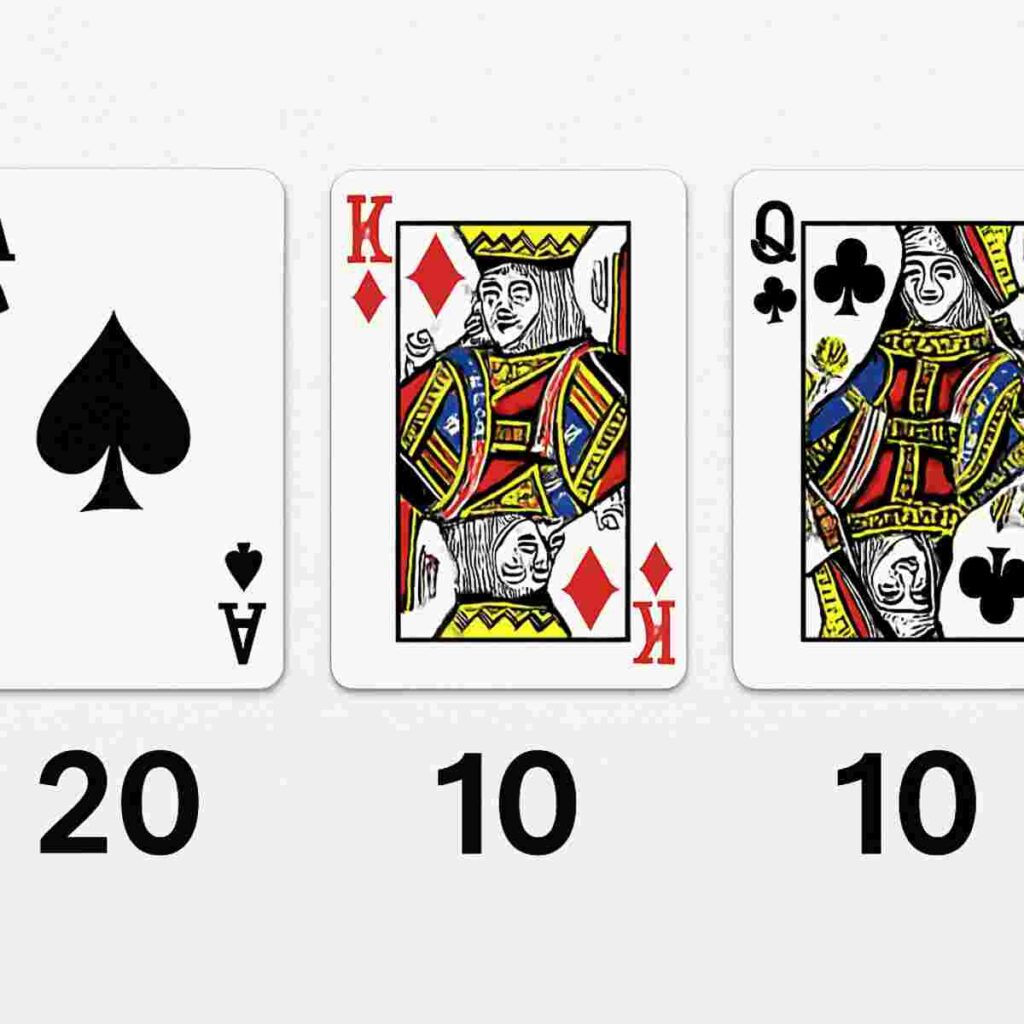
- Aces & Wild Cards (Jokers, 2s): 20 points each
- 8 through King: 10 points each
- 4 through 7: 5 points each
- Black 3s: 5 points each
For example, if you need 50 points, you could play a meld of three Kings (30 points) and a meld of four 5s (20 points) in the same turn. Once you’re on the board, you can add to your melds freely on future turns.
How to Take the Discard Pile: A Key Strategic Move
Instead of drawing two cards from the stock, you have a more powerful option: taking the entire discard pile. This move can instantly give you a huge number of cards, but it comes with a specific requirement.
To claim the pile, you must be able to use its top card in a new meld using cards from your hand. Specifically, you need a “natural pair”—two cards of the same rank, without wild cards—that matches the top card. For example, if the top card is a 9, you can only take the pile if you hold at least two other 9s in your hand. You cannot use one 9 and a wild card for this purpose.
This strict rule exists because the discard pile is considered “frozen.” The only way to “unfreeze” it is by showing that natural pair. Discarding a wild card also freezes the pile, making it a great defensive play.
Once you prove you can take the pile, you must immediately meld the top discard with your pair. After that, you pick up the rest of the discard pile, add it to your hand, and can continue your turn by making other melds before discarding to end your turn.
How to End the Round by “Going Out”
A round ends when one player successfully “goes out” by playing every card from their hand, leaving just one for a final discard. This action earns your team a 200-point bonus, and play stops immediately for everyone.
Before you can go out, your partnership must meet a critical requirement: your team must have completed at least two Canastas or one Samba. You cannot end the round, no matter how few cards you’re holding, until this is achieved.
Because Samba is a team game, on your turn, if you believe you can go out, you must first ask, “Partner, may I go out?” If your partner says “Yes,” you are obligated to go out if possible. If they say “No,” you must continue playing. This prevents you from ending the round while your partner holds a handful of valuable cards.
Tallying the Score: A Complete Guide to Samba Scoring
Once a player goes out, it’s time to count the points. The process involves two parts: tallying bonus points and then adding or subtracting the value of all cards played or left in hand. Many players use a samba scoring sheet to keep track.
- Bonus Points:
- Samba (sequence canasta): +1500 points
- Natural Canasta (no wilds): +500 points
- Mixed Canasta (with wilds): +300 points
- Going Out: +200 points
- Card Point Values:
- Jokers: 50 points
- Aces & 2s (Wilds): 20 points
- King through 8: 10 points
- 7 through 4 & Black 3s: 5 points
- Penalties:
- Each Red 3 (if the team made no melds): -500 points
- All cards left in hand: Subtracted from score
To get your final score, add up your team’s bonus points and the point values of every card your team melded. Then, your opponents count the value of all cards left in their hands, and this total is subtracted from your score. Likewise, any cards left in your hands are subtracted from your score.
Your Samba Cheat Sheet: Key Rules at a Glance
Refer to this quick guide during your first few games to help remember the core rules. Focus on having fun, and the rest will click into place as you play.
- Turn Order: Draw 2, Meld (optional), Discard 1.
- Key Melds: A Canasta is seven same-rank cards; a Samba is a seven-card suit sequence.
- Key Bonuses: Samba = 1500; Natural Canasta = 500; Mixed Canasta = 300.
- Wild Cards: Jokers and 2s can stand in for any card in a meld.
- Going Out: Your team must have at least two Canastas or one Samba melded first.
The best way to learn is by playing. Shuffle up, deal the cards, and enjoy the game!