


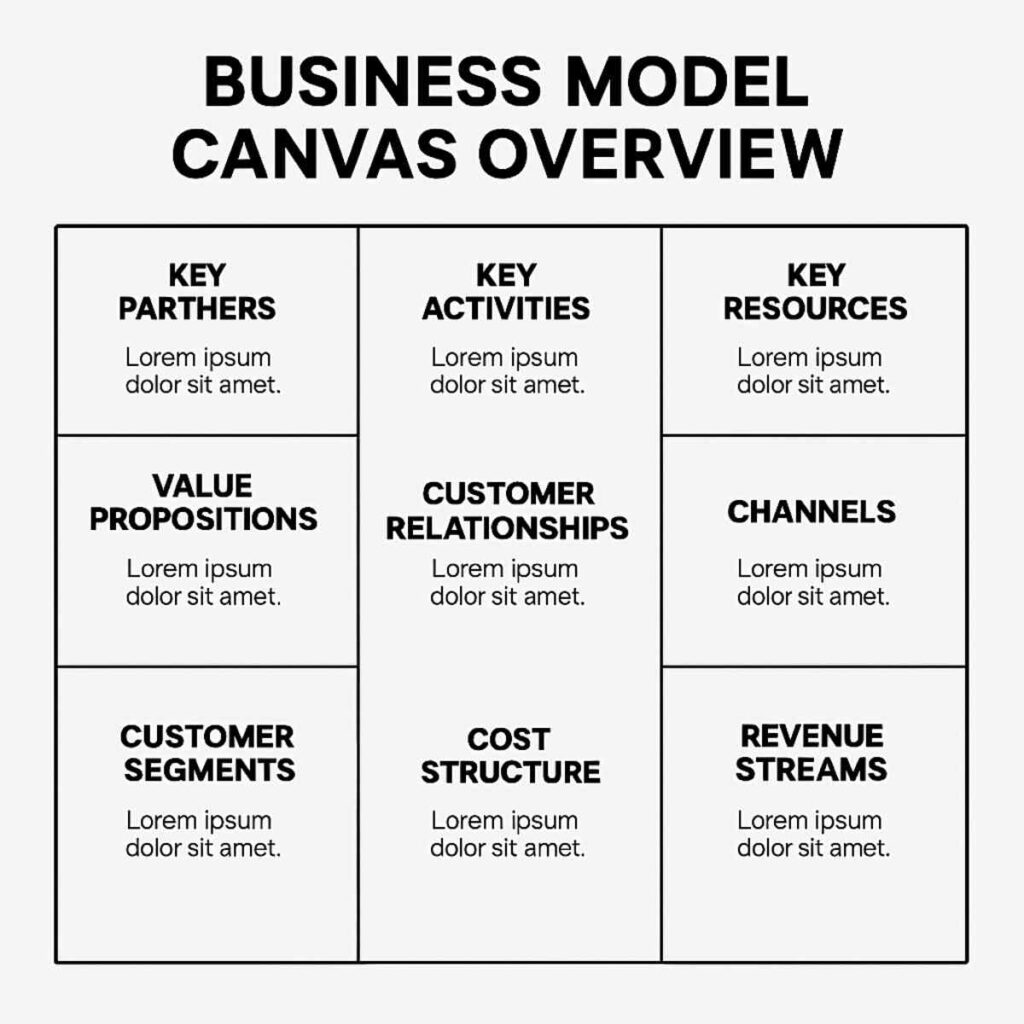
In the dynamic landscape of Malaysian entrepreneurship, the Business Model Canvas (BMC) has emerged as an invaluable tool for startups and established enterprises alike. This strategic management template allows businesses to succinctly define and communicate their business model by detailing key elements such as value propositions, customer segments, and revenue streams. Select the best Business Model Canvas Course Malaysia.
This article delves into the transformative impact of the Business Model Canvas in Malaysia, spotlighting success stories that underscore its efficacy in fostering innovation and strategic clarity.
The Business Model Canvas, developed by Alexander Osterwalder, is a visual chart with elements describing a firm’s value proposition, infrastructure, customers, and finances. It assists firms in aligning their activities by illustrating potential trade-offs. In the Malaysian context, where business environments are continually evolving, the BMC serves as a pivotal tool for entrepreneurs to pivot and adapt with agility.
Origins and Evolution of the BMC
The origins of the Business Model Canvas trace back to the need for a simplified, yet comprehensive way to capture the core elements of a business model. Alexander Osterwalder introduced this as part of his PhD research, which has since evolved into a globally recognized tool. Over the years, the BMC has been refined and adapted to fit the unique needs of various industries, including the diverse business landscape of Malaysia.
The evolution of the BMC in Malaysia highlights its flexibility. As Malaysian businesses face unique challenges due to cultural, economic, and regulatory factors, the BMC has been adapted to help businesses navigate these complexities. This adaptability makes it a preferred tool for both startups and established firms looking to innovate and refine their business strategies.
Key Components of the BMC
The Business Model Canvas is segmented into nine key components, each crucial for mapping out a business’s strategy. These include customer segments, value propositions, channels, customer relationships, revenue streams, key resources, key activities, key partnerships, and cost structures. By focusing on these elements, businesses can ensure they have a holistic view of their operations and strategic direction.
In Malaysia, these components are particularly useful in addressing market-specific challenges. For example, understanding customer segments helps businesses tailor products and services to the diverse Malaysian demographic. Similarly, identifying key partnerships can be instrumental in navigating local business ecosystems, fostering collaborations that enhance operational efficiency and market reach.
BMC’s Role in Strategic Alignment
The BMC’s visual nature aids in aligning team efforts towards a common strategic goal. By providing a clear depiction of a company’s strategy, it facilitates better communication among stakeholders, ensuring everyone is on the same page. This is particularly important in Malaysia, where businesses often operate across cultural and linguistic divides.
In practice, the BMC encourages continuous dialogue and iteration. As teams collaborate on refining their canvas, they often uncover new insights into their business model, leading to innovative solutions and strategies. This iterative process is crucial for businesses in Malaysia seeking to stay competitive in a rapidly changing market landscape.
Business Model Canvas Course Malaysia
In Malaysia, the Business Model Canvas is not just a theoretical framework; it is a practical guide that has been integrated into various business courses and training programs. Numerous institutions offer a Business Model Canvas Course in Malaysia that equips business leaders with the skills to utilize the BMC effectively. These courses provide an in-depth understanding of how to apply the canvas to real-world scenarios, fostering a mindset of innovation and strategic foresight.
Curriculum and Learning Outcomes
The curriculum of a typical Business Model Canvas course in Malaysia is designed to cover both foundational concepts and advanced applications. Courses often start with an introduction to the BMC’s components, followed by case studies and hands-on workshops that simulate real business scenarios. Participants learn to dissect existing business models and construct new ones, promoting a deep understanding of strategic planning.
Learning outcomes from these courses are significant. Participants not only gain the ability to use the BMC as a strategic tool but also develop critical thinking and problem-solving skills. These courses empower business leaders to innovate, helping them discover new market opportunities and improve operational efficiencies.
Industry-Specific Applications
Courses often tailor their content to address industry-specific challenges and opportunities. For instance, a course focused on the tech industry might emphasize the role of the BMC in product development and market entry strategies. Meanwhile, courses designed for the retail sector might explore customer segmentation and value proposition refinement.
This industry-specific approach ensures that participants can immediately apply what they learn to their respective fields. By understanding how the BMC can be customized to fit different industries, business leaders can better address the unique challenges they face, leading to more effective strategic planning and execution.
Benefits of Localized Training
Localized training offers significant benefits, particularly in a diverse country like Malaysia. Courses conducted in Bahasa Malaysia ensure that language barriers do not hinder understanding, making the BMC more accessible to local entrepreneurs. Additionally, localized examples and case studies resonate more deeply with participants, enhancing their learning experience.
This approach also fosters a sense of community and collaboration among participants. By sharing experiences and insights, business leaders can learn from each other, gaining new perspectives that enrich their strategic thinking. This collaborative learning environment is vital for fostering innovation and driving growth in Malaysia’s business landscape.
Success Stories: Malaysian Enterprises Embracing the Business Model Canvas
Case Study: A Tech Startup Revolutionizing E-Commerce
One of the notable success stories in Malaysia involves a tech startup that leveraged the Business Model Canvas to redefine its business model amidst the burgeoning e-commerce sector. Initially, the startup faced challenges in differentiating its platform from competitors. By employing the BMC, the company identified a unique value proposition that centered on personalized customer experiences and seamless logistics integration.
The canvas enabled the startup to map out its customer segments more effectively, which led to tailored marketing strategies that significantly increased user engagement and retention. Additionally, the BMC facilitated a clearer visualization of potential revenue streams, allowing the company to diversify its income sources and enhance its financial stability.
Overcoming Market Challenges
Entering the competitive e-commerce market posed significant challenges for the startup. With numerous players already established, differentiation was key. The BMC provided a structured approach to analyze competitors and identify gaps in the market. This analysis led to the discovery of unmet customer needs, which the startup addressed through innovative product offerings and enhanced user experiences.
The startup’s agility in adapting its business model was crucial. Regularly revisiting and updating the BMC allowed the company to stay ahead of market trends and customer preferences. This proactive approach ensured sustained growth and a competitive edge in the rapidly evolving e-commerce landscape.
Customer-Centric Innovations
By focusing on customer segments and value propositions, the startup was able to tailor its services to meet specific customer needs. This customer-centric approach was instrumental in building brand loyalty and increasing market share. The BMC facilitated a deeper understanding of customer journeys, enabling the startup to enhance user experiences through personalized services and targeted marketing campaigns.
The emphasis on customer relationships also led to innovative solutions in logistics and delivery, addressing common pain points in the e-commerce experience. By streamlining operations and improving service delivery, the startup not only enhanced customer satisfaction but also improved its operational efficiency and cost-effectiveness.
Financial Diversification and Stability
Understanding potential revenue streams was a game-changer for the startup. The BMC helped identify new income sources, such as subscription models and value-added services, which diversified the company’s revenue base. This diversification was crucial for financial stability, allowing the startup to weather market fluctuations and invest in future growth.
The structured approach of the BMC also enabled more effective financial planning and resource allocation. By clearly mapping out cost structures and revenue streams, the startup could make informed decisions about investments and expenditures, optimizing its financial performance and ensuring long-term sustainability.
Business Model Canvas in Bahasa Malaysia

The adaptability of the Business Model Canvas is further exemplified by its use in Bahasa Malaysia, catering to local entrepreneurs who prefer working in their native language. This localization of the BMC ensures that the framework is accessible and relatable to a broader audience, promoting its widespread adoption across diverse sectors.
Bridging Language Barriers
In a multilingual country like Malaysia, language can be a barrier to business success. By translating the BMC into Bahasa Malaysia, local entrepreneurs can engage with the framework more effectively, ensuring that language does not impede strategic planning. This accessibility is crucial for smaller businesses and startups that may not have the resources for extensive language training.
The use of Bahasa Malaysia also fosters greater inclusivity, allowing entrepreneurs from various backgrounds to participate in strategic discussions and decision-making processes. This inclusivity enhances collaboration and innovation, driving growth across diverse sectors of the Malaysian economy.
Cultural Relevance and Relatability
Localization goes beyond language; it involves adapting content to resonate with cultural norms and business practices. The BMC in Bahasa Malaysia incorporates local business examples and case studies, making the framework more relatable to Malaysian entrepreneurs. This cultural relevance enhances understanding and application, empowering businesses to leverage the BMC for strategic advantage.
Culturally relevant training and resources also foster a sense of ownership and pride among local entrepreneurs. By seeing their experiences and challenges reflected in the BMC, they are more likely to engage with the framework and apply it to their business contexts, leading to more effective strategic planning and execution.
Expanding Reach Across Sectors
The localized BMC has facilitated its adoption across various sectors in Malaysia, from agriculture and manufacturing to technology and services. By making the framework accessible to a broader audience, the BMC has become a staple of strategic planning for businesses of all sizes and industries.
This widespread adoption has fostered a culture of innovation and strategic thinking across the Malaysian business landscape. As more businesses embrace the BMC, they contribute to a vibrant and dynamic entrepreneurial ecosystem, driving economic growth and development in Malaysia.
Case Study: A Social Enterprise Driving Community Impact
Another compelling narrative comes from a Malaysian social enterprise that employed the Business Model Canvas to amplify its community impact. Focused on sustainable agriculture, the enterprise initially struggled with articulating its mission and scaling its operations. Through the BMC, the enterprise was able to clearly define its social value proposition and identify key partnerships with local farmers and NGOs.
The canvas facilitated a structured approach to scaling operations, optimizing resource allocation, and enhancing operational efficiency. The result was a significant increase in local farmer engagement and a more robust supply chain that elevated the enterprise’s social and environmental impact.
Defining Social Value Propositions
For social enterprises, articulating a clear social value proposition is crucial. The BMC enabled this enterprise to define its mission in terms of tangible social and environmental outcomes. By mapping out its value propositions, the enterprise could communicate its impact more effectively to stakeholders, attracting support from investors, partners, and customers who shared its vision for sustainable agriculture.
This clarity also facilitated strategic partnerships with NGOs and government agencies. By aligning their missions and resources, the enterprise and its partners could amplify their collective impact, driving meaningful change in the communities they served.
Building Strong Partnerships
Key partnerships were instrumental in the enterprise’s success. The BMC provided a framework for identifying and nurturing relationships with local farmers, NGOs, and other stakeholders. These partnerships were vital for building a sustainable supply chain and enhancing operational efficiency.
Collaboration with local farmers, for example, enabled the enterprise to source high-quality, sustainable agricultural products while supporting local communities. By fostering these mutually beneficial relationships, the enterprise could scale its operations and enhance its impact, contributing to the broader goals of social and environmental sustainability.
Enhancing Operational Efficiency
The structured approach of the BMC facilitated improvements in operational efficiency. By clearly mapping out key activities and resources, the enterprise could optimize its processes and resource allocation. This optimization led to cost savings and improved service delivery, enhancing the enterprise’s ability to scale and impact its target communities.
Efficiency gains also freed up resources for innovation and expansion. The enterprise could invest in new technologies and processes, further enhancing its impact and ensuring its long-term sustainability in the competitive social enterprise landscape.
Business Model Canvas Training Malaysia
In recognition of the pivotal role the BMC plays in strategic planning and innovation, numerous organizations offer Business Model Canvas Training in Malaysia. These training sessions are designed to hone the skills of business professionals, enabling them to leverage the BMC for competitive advantage. Participants learn to dissect and reconstruct their business models, gaining insights into areas of potential growth and improvement.
Training Formats and Accessibility
Business Model Canvas training in Malaysia is offered in various formats, including workshops, online courses, and in-person sessions. This variety ensures accessibility for professionals with different learning preferences and schedules. Workshops often provide intensive, hands-on experiences, while online courses offer flexibility and convenience for busy professionals.
These training programs are designed to cater to a diverse audience, from budding entrepreneurs to seasoned business leaders. By offering multiple formats, training providers ensure that everyone can benefit from the insights and skills needed to effectively use the BMC in their strategic planning efforts.
Enhancing Strategic Thinking
The primary goal of BMC training is to enhance strategic thinking among business professionals. Participants learn to view their business models through a strategic lens, identifying opportunities for innovation and improvement. This mindset shift is crucial for businesses seeking to stay competitive and adapt to changing market conditions.
Through case studies and practical exercises, participants gain a deeper understanding of how to apply the BMC to real-world scenarios. This practical experience is invaluable, equipping business leaders with the tools and confidence to make informed strategic decisions that drive growth and success.
Building a Community of Innovators
BMC training also fosters a community of innovators and strategic thinkers. Participants have the opportunity to network and collaborate with peers from various industries, sharing insights and best practices. This collaborative environment encourages the exchange of ideas and perspectives, driving innovation and creativity.
By building a network of like-minded professionals, BMC training contributes to a vibrant entrepreneurial ecosystem in Malaysia. As participants return to their organizations with new skills and insights, they inspire others to adopt innovative approaches to strategic planning, fostering a culture of continuous improvement and growth.
The Role of BMC in Startup Ecosystems
Within Malaysia’s vibrant startup ecosystem, the Business Model Canvas serves as a foundational tool for incubators and accelerators. It empowers startups to articulate their business models succinctly, facilitating investor pitches and collaborative ventures. The structured approach of the BMC provides a common language for stakeholders, streamlining communication and fostering a culture of innovation.
Facilitating Investor Engagement
For startups, engaging with investors is a critical step in securing funding and support. The BMC provides a clear and concise way to present business models, making it easier for investors to understand and evaluate potential opportunities. This clarity is crucial for building investor confidence and securing the resources needed for growth and development.
By using the BMC to articulate their strategies, startups can effectively communicate their value propositions, market potential, and growth plans. This strategic clarity enhances investor engagement, increasing the likelihood of successful funding rounds and strategic partnerships.
Enhancing Collaboration and Communication
The BMC’s structured approach fosters collaboration and communication among startup teams and stakeholders. By providing a common framework for discussing business models, the BMC facilitates alignment and consensus-building, ensuring that everyone is working towards the same strategic goals.
This collaborative environment is essential for driving innovation and creativity within startups. By encouraging open dialogue and the exchange of ideas, the BMC helps startups identify new opportunities and develop innovative solutions, enhancing their competitiveness and market positioning.
Accelerating Growth and Innovation
Incubators and accelerators in Malaysia leverage the BMC to accelerate startup growth and innovation. By guiding startups through the process of developing and refining their business models, these programs help entrepreneurs identify and capitalize on market opportunities.
The BMC’s emphasis on continuous iteration and improvement also encourages startups to remain agile and responsive to market changes. This agility is crucial for maintaining a competitive edge in the fast-paced startup ecosystem, enabling businesses to adapt and thrive in dynamic market conditions.
Case Study: A Fintech Innovator Streamlining Financial Services
A fintech company in Malaysia exemplifies the transformative power of the Business Model Canvas in the financial services sector. Initially hindered by regulatory complexities and market entry barriers, the company utilized the BMC to redefine its customer value proposition and streamline its service offerings.
Navigating Regulatory Challenges
Navigating the complex regulatory landscape of the financial services sector was a significant challenge for the fintech company. The BMC provided a framework for understanding these complexities and developing strategies to address them. By mapping out key regulatory requirements and identifying potential partners, the company was able to mitigate risks and streamline its compliance processes.
This strategic approach enabled the fintech company to enter the market more effectively, ensuring that it could operate within legal constraints while delivering innovative financial solutions to its customers. By leveraging the BMC, the company could navigate regulatory challenges with confidence and agility, paving the way for growth and expansion.
Developing Scalable Business Models
The BMC’s emphasis on scalability was crucial for the fintech company’s success. By analyzing key resources, activities, and partnerships, the company was able to develop a scalable business model that could accommodate growth and expansion. This scalability was essential for capturing market share and establishing a strong presence in the competitive fintech landscape.
By focusing on scalability, the company could optimize its operations and resource allocation, ensuring that it could deliver high-quality services to a growing customer base. This focus on scalability also enabled the company to adapt to market changes and seize new opportunities, driving sustained growth and innovation.
Forming Strategic Partnerships
Strategic partnerships were instrumental in the fintech company’s success. The BMC facilitated the identification and development of relationships with banks, financial institutions, and technology partners. These partnerships provided the company with access to new markets, customers, and resources, enhancing its competitiveness and market positioning.
By leveraging these strategic partnerships, the fintech company could expand its reach and deliver innovative financial services to a broader audience. This collaboration also fostered innovation and creativity, enabling the company to stay ahead of market trends and deliver cutting-edge solutions to its customers.
Conclusion: The Strategic Advantage of the Business Model Canvas
The success stories illustrated above underscore the strategic advantage that the Business Model Canvas offers to Malaysian enterprises. By providing a clear and concise framework for articulating business models, the BMC empowers companies to innovate, adapt, and thrive in a competitive market environment.
Whether through a structured Business Model Canvas Course Malaysia or targeted training sessions, the BMC continues to be a transformative tool for businesses seeking to enhance their strategic clarity and operational efficiency. As Malaysia’s business landscape continues to evolve, the Business Model Canvas remains an essential component of strategic planning, driving success and fostering sustainable growth.
In conclusion, the Business Model Canvas is not merely a theoretical tool but a practical framework that has proven its worth across various sectors in Malaysia. Its ability to distill complex business models into actionable insights makes it an invaluable asset for any business aiming to achieve sustained success. By fostering innovation, collaboration, and strategic thinking, the BMC is empowering Malaysian businesses to navigate challenges, seize opportunities, and drive growth in an ever-changing market landscape.