


Ready for the fastest card game you’ve ever played? In the time it takes you to read these rules, you could have already finished your first round. Blink is a game of speed, not strategy, where a sharp eye and quick hands are all you need to win. Check out Daftar ABILAWA99 to know more
The entire game boils down to one simple goal: be the first player to get rid of all your cards. What makes this so different—and why it’s often called the fastest card game in the world—is that you don’t wait for a turn. It’s a head-to-head race where both players match and discard cards from their hands simultaneously, playing as fast as they can.
Sound easy? It is. Forget long, complicated manuals. These essential rules for the Blink card game will have you set up and playing your first lightning-fast round in just a few minutes.
What’s in the Deck? The 3 Ways to Match a Card
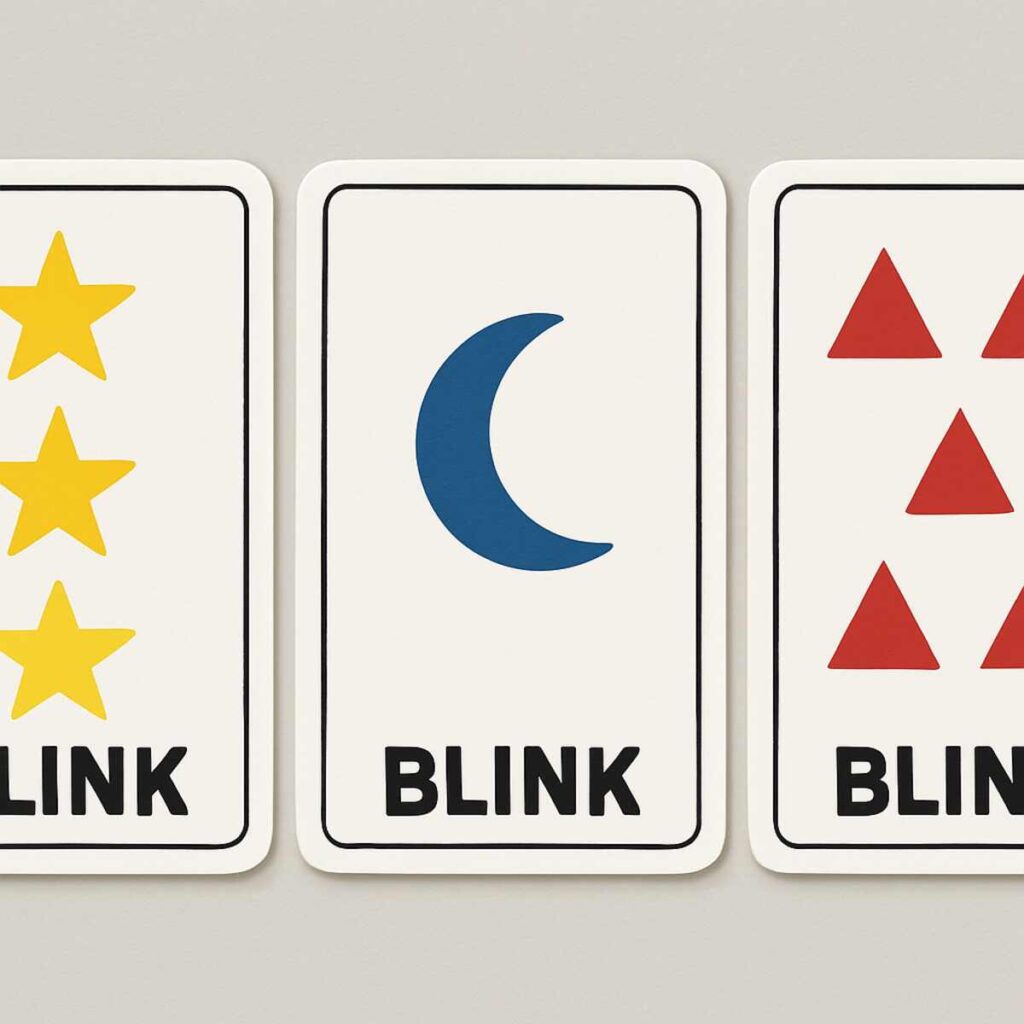
At the heart of Blink is one simple question: “Can I play this card?” The answer is always “yes” if a card in your hand matches the top card on either discard pile in one of three simple ways. You don’t need to match all three attributes; just one is enough to make a play.
A match can be made by:
- COLOR: Play a red card on any other red card, regardless of its shape or count.
- SHAPE: Play a card with stars on any other card with stars, no matter the color or count.
- COUNT: Play a card showing five symbols on any other card showing five symbols, even if the color and shape are different.
Unlike many card games you might have played, Blink keeps things incredibly straightforward. The 60-card deck has no “Skip,” “Reverse,” or other special action cards to memorize. Every single card is a potential match, which means your focus stays entirely on spotting a valid play and acting fast.
With the matching rules down, you’re ready to get the cards out of the box and onto the table.
How to Set Up a Game and Deal the Cards in 60 Seconds
Getting a game of Blink started is just as fast as playing it. Unlike games with complex boards, the entire setup involves creating a few simple stacks of cards on the table. For a standard two-player game, you’ll be creating a personal pile for each player and two shared piles in the middle.
Follow these four simple steps to deal the cards:
- Shuffle the entire 60-card deck thoroughly.
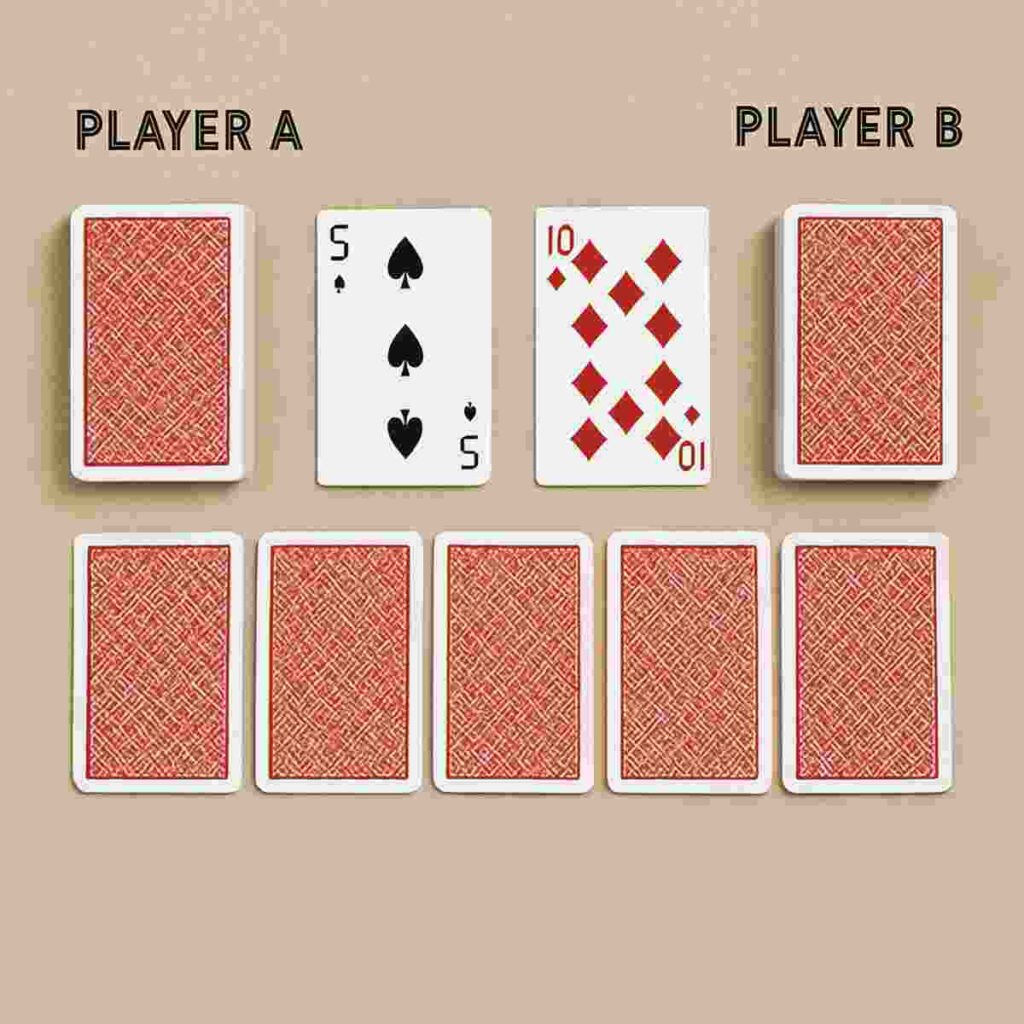
- Deal the Draw Piles. Give each player a stack of 30 cards, placed face-down. This is your personal Draw Pile. Your goal is to get rid of all the cards in this pile to win. Don’t look at them!
- Create the Center Piles. Place the remaining cards that were not dealt into two equal piles, face-down, in the middle of the table between the players. These will soon become your Discard Piles.
- Draw Your Hand. Each player now draws the top three cards from their own Draw Pile. This is your Hand, and you can look at these cards.
Once the cards are dealt, the table should look like the picture below. You have your private Draw Pile, the three cards in your hand that you can play, and the two un-started Discard Piles in the center waiting for the action to begin.
With the game set up and three cards ready, you’re just a moment away from the frantic fun. Next is the single most important rule you need to remember as you play.
The Most Important Rule: Always Keep Three Cards in Your Hand
If you remember just one thing about how to play the Blink card game, make it this: your hand should almost always have three cards. The game is built around a simple, lightning-fast rhythm: when you play one card, you immediately draw one card. This core loop is the engine that keeps the game moving at its signature breakneck speed.
The moment one of your cards successfully lands on a Discard Pile, your very next action is to draw the top card from your personal Draw Pile to replenish your hand. This isn’t optional; it’s a fundamental part of the rules for the Blink card game. This constant refreshing of your hand is what gives you new options to make another match, ensuring you never have to pause for long.
This “play one, draw one” cycle continues until your Draw Pile is empty. This is a critical rules clarification: once your pile is gone, you stop drawing. Your new, final mission is simply to play the last few cards remaining in your hand. Maintaining this rhythm is simple enough on its own, but it becomes a frantic and exciting challenge when you factor in the game’s biggest twist.
The Big Twist: How to Play a Game with No Turns
Here is where Blink completely changes the rules for a card game and earns its title as the “fastest card game in the world.” Forget everything you know about waiting your turn. In Blink, both players play at the same time. As soon as you spot a legal match between a card in your hand and a card on either Discard Pile, you can play it. It’s a head-to-head race to empty your hand and your Draw Pile.
This creates an obvious question: what happens if you both try to play a card on the same pile at the same time? The tie-breaking procedure is simple and definitive: the first card to physically land on the pile wins the spot. The other player must quickly retrieve their card and take it back into their hand. There are no do-overs; the player whose card hits the pile second simply has to find another opportunity to play.
This “first-come, first-served” rule is the key to understanding how to win at the Blink game. Success isn’t just about spotting a match; it’s about having the reflexes to play your card before your opponent does. You are constantly trying to process the board and act faster than the person across from you, making every moment of the game an exciting test of speed and focus.
But for all this speed, there will be moments where everything grinds to a halt. What happens when you look down and realize you can’t play a single one of your three cards?
What Do You Do When You’re Stuck and Can’t Play?
That moment of being stuck is bound to happen. If you can’t make a legal move but your opponent is still playing, your job is simple: wait. Since there are no turns, the game continues at their pace. As they play cards, the top card on one of the Discard Piles will change, which will almost certainly give you a new opening to jump back into the action. You just have to be patient and ready to seize the next opportunity.
Occasionally, the entire game will grind to a halt when both players are stuck at the same time. This situation requires a special reset. To fix the stall, both players agree to pause. Then, each person takes the top card from their own Draw Pile and, at the same time, places it face-up on one of the Discard Piles. This action instantly introduces two new cards into play, and the head-to-head race is back on!
Getting stuck is a normal part of the game; it is not a penalty and doesn’t mean you are losing. Think of it as a temporary pause in your lightning-fast quest to get rid of all your cards. This focus on getting rid of your main stack of cards is crucial, because that is exactly how you claim victory.
How to Officially Win a Round of Blink
The goal of every frantic match is to empty your personal Draw Pile. You officially win the moment you play a card from your hand and have no cards left in your Draw Pile to replace it. As soon as that last card is drawn and legally played onto a discard pile, the round ends immediately. You can shout “Blink!” to declare your victory, or simply enjoy the moment of being the quickest player.
A common question that pops up is, “What about the cards left in my hand?” The answer is simple: they don’t matter. The official rules for how to win at the Blink card game are focused entirely on your Draw Pile. If you successfully play the last card you drew from your pile, you win instantly, even if you’re still holding one or two other cards in your hand.
Since a round of Blink can be over in under a minute, most people play multiple games back-to-back. The easiest way to keep score is to award one point for each round won. You can decide beforehand to play until someone reaches five points, or simply see who wins the best of three or five rounds. This quick resolution is what makes it a fast-paced alternative to other classic card games.
Blink vs. Uno: Why Blink is the Faster, Simpler Showdown
If you’re thinking Blink sounds a bit like a sped-up Uno, you’re on the right track—but the key differences are what make each game shine in different situations. While both games involve matching cards to a central pile, their pacing and complexity create entirely different experiences. Think of Uno as a casual conversation, while Blink is a frantic, head-to-head debate where everyone talks at once.
The most significant difference in the Blink vs. Uno card game debate is the concept of turns. Uno is a turn-based game; you play a card, and then you wait for everyone else to take their turn before you can play again. Blink throws that entire structure out the window. There are no turns, and both players play cards simultaneously, making it a pure test of speed and reflexes. This is why a round of Blink is often over in under two minutes, whereas a round of Uno can easily last ten minutes or more.
Another key distinction lies in the cards themselves. Uno’s deck includes action cards like Skip, Reverse, and Draw Four, which introduce strategic layers and can dramatically shift the game’s momentum. Blink, by contrast, is much simpler. Every card is a “match” card, and your only task is to find a connection by color, count, or shape. This removes the need to track special rules and keeps the focus entirely on fast-paced matching.
The right game depends on what you’re looking for:
- Choose Blink when: You want a quick, intense, two-player duel that tests your reflexes. It’s perfect for a burst of energy or when you only have a few minutes to spare.
- Choose Uno when: You want a more relaxed, social game with a larger group that involves a bit of luck and light strategy.
Ultimately, while they share a DNA of matching cards, they are two very different animals. Blink is one of the fastest card games you can find, built for speed, while Uno is built for more traditional, turn-based fun.
Ready for a Challenge? How to Play Blink with 3 Players or More
Once you’ve mastered the two-player duel, you might wonder, “Can you play Blink with 3 players?” The answer is a definite yes, and the rule change is incredibly simple. Instead of creating two discard piles in the center when you start, you only create one. All three players will now race to play their cards onto this single, shared pile, following the same matching rules as before.
This small adjustment is crucial for keeping the game fast and competitive. With three sets of eyes scanning for a match, having two piles would make it too easy to play a card. By focusing all the action onto one spot, the game becomes an even more frantic and hilarious race. You’re no longer just watching one opponent—you’re trying to beat everyone at the table to that one precious spot on the pile.
For those who become true Blink champions, the official Mattel Blink card game rulebook even includes a few “expert” variations for a tougher challenge. These optional rules, like playing with a four-card hand instead of three, add a new layer of difficulty. These Blink card game variations are perfect for when you’re ready to test your skills even further.
You Now Know How to Play Blink: Your 30-Second Rule Recap
You’re now ready to race. To make your first game a breeze, keep these four key Blink card game instructions in mind. This is all you need to remember:
- Goal: Be the first player to empty your Draw Pile.
- Hand: Always keep three cards in your hand (play one, draw one).
- Match: Play a card by matching its Color, Shape, or Count.
- Speed: Forget taking turns! Both players play as fast as they can.
That’s everything. You’re officially ready to prove your reflexes. The simple rules make this a fantastic Blink card game for kids and adults alike, so grab an opponent and shuffle the deck. Stop reading and start playing—go on, play your first round.